
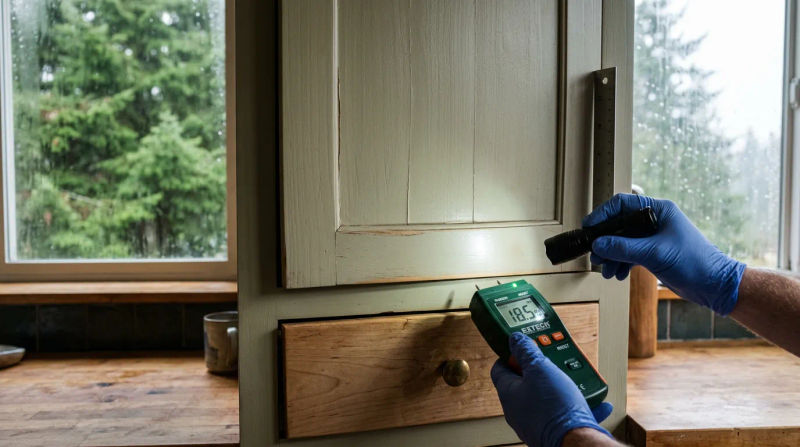
It’s a familiar feeling for anyone living around Damascus: that first crisp, rainy day in October when you can smell the wet earth and falling leaves. You head to the kitchen for a coffee mug, and the cabinet door that has opened smoothly all summer suddenly catches on the frame. It’s a subtle change, but one that my team and I hear about every single autumn. That slight stickiness is often the first sign that the seasonal shift in humidity is starting to affect the woodwork in your home.
As a cabinetmaker, I’ve spent over a decade working with wood, and I can tell you it has a life of its own. It breathes and moves with the seasons, just like we do. Here in the Pacific Northwest, that transition from our dry summers to our damp falls is particularly pronounced. Understanding what’s happening to your cabinets and knowing what to look for can help you decide if it's a simple quirk of the season or a sign of a bigger problem that needs attention before winter sets in.
Common Signs and Symptoms
When humidity rises, wood absorbs moisture from the air and swells. This movement is often subtle, but it shows up in very specific ways. If you’re noticing changes in your kitchen or bathroom cabinetry as the rains return, here are some of the most common cabinet warping signs to watch for:
- Sticking Doors and Drawers: This is the number one symptom. A door that now rubs against an adjacent door or the cabinet frame is a classic sign of swelling. You might notice that Damascus cabinet doors sticking becomes more common in October. Similarly, drawers that once glided effortlessly may start to bind or require an extra push to close completely.
- Uneven Gaps: Take a step back and look at the lines of your cabinetry. The space, or “reveal,” between doors should be consistent. If you start seeing gaps between cabinet doors in fall that are wider at the top and tighter at the bottom (or vice-versa), it’s a sign that a door is beginning to twist or warp.
- Difficulty Latching: You might find that doors with magnetic or mechanical latches no longer close securely. The door may pop open on its own because the swelling has pushed it slightly out of alignment with the latch.
- “Proud” or Uneven Surfaces: Run your hand over a cabinet door, especially a frame-and-panel style. Does the central panel feel like it’s pushing out past the frame? Or does the entire door feel slightly bowed or “cupped”? You can also check this by placing a straightedge across the door’s surface.
- Visible Warping or Twisting: The most serious sign is a door that is visibly no longer flat. If you look down the edge of the door from top to bottom, you can see a noticeable twist. A warped door will not close properly and puts significant stress on its hinges.
- Finish Changes: In some cases, you might see subtle changes in the finish. The expansion and contraction of the wood can cause hairline cracks in the paint or clear coat, especially around the joints where rails and stiles meet.
What Causes This Problem
The root cause of all these issues is the natural properties of wood itself. Wood is a hygroscopic material, which means it acts like a sponge, absorbing and releasing moisture to stay in equilibrium with its surrounding environment. This is the source of most humidity cabinet swelling symptoms.
During our dry summers, the relative humidity inside our homes drops. Wood releases moisture into the dry air and shrinks slightly. This is often when you might notice gaps appearing that weren't there before. When the autumn rains begin, the opposite happens. The outdoor humidity rises, and even with our windows closed, the indoor humidity level increases. The wood in your cabinets begins to absorb this excess moisture and swells.
Several factors influence how much your cabinets will move:
- Type of Wood: Solid wood moves more than engineered materials. Cabinets with solid wood doors and face frames will show these seasonal changes far more than those made primarily from plywood, MDF, or particleboard. Plywood is more stable because its thin layers are glued together with the grain direction alternating, which restricts movement.
- Construction Style: A five-piece frame-and-panel door is designed to allow for some of this movement. The central panel is often intentionally left to “float” within the frame so it can expand and contract without breaking the joints. A solid slab door, on the other hand, is more prone to cupping or warping because there’s nothing to restrain its movement across the entire width of the board.
- The Finish: A high-quality finish (like paint, lacquer, or polyurethane) acts as a barrier that slows down the rate of moisture exchange. However, no finish can stop it completely. If the finish is worn, damaged, or was not applied evenly to all sides of the door (including the back and edges), moisture can penetrate more easily and cause more dramatic movement.
When to Call a Professional
So, your cabinet doors are sticking. Is it time to panic? Not necessarily. A small amount of seasonal movement is normal for wood cabinetry. The key is knowing when a minor annoyance has become a genuine problem that could cause permanent damage if ignored.
Potential DIY Fixes: If a door is only rubbing slightly, you may be able to make a simple adjustment. Most modern cabinet hinges are adjustable in three directions. Look for the screws on the hinge; one will move the door up and down, another in and out, and a third left and right. A small tweak can often create the clearance needed to stop the rubbing. However, be careful not to over-adjust, as you can make the gaps uneven.
When to Call an Expert: You should contact an experienced woodworker or cabinetmaker if you see any of these red flags:
- The Door is Visibly Warped: If a door is cupped or twisted, hinge adjustments won't fix it. Trying to force it flat can crack the wood or damage the hinge. A professional can assess if the warp can be corrected or if the door needs to be replaced.
- Hinge Adjustments Don't Work: If you’ve adjusted the hinges as far as they can go and the door still sticks, the swelling is too significant for a simple fix.
- The Finish is Cracking or Peeling: This is a sign that moisture is getting past the protective barrier. If left unaddressed, the wood underneath can be damaged, leading to discoloration or even rot. A professional can determine the extent of the damage and recommend refinishing or repair.
- Drawers are Completely Stuck: Do not try to force a stuck drawer. You can easily break the drawer box, the face frame, or the drawer slides. An expert has techniques to release the drawer without causing further damage.
- You See Cracks in the Wood or Joints: If the wood's movement is causing joints to separate or the wood itself to split, it requires immediate professional attention to stabilize the cabinet and prevent further deterioration.
Conclusion
Living in a place with distinct seasons like Damascus means our homes have to adapt. Noticing your cabinet doors are a little tight in the fall is often just a sign that your solid wood is behaving exactly as it should. It’s a reminder of the natural, beautiful material in your home.
However, it's important to pay attention to the difference between normal seasonal movement and the early signs of a real problem. Minor sticking, small gaps, and slight binding are often temporary. But significant warping, cracked finishes, and doors that refuse to close are issues that won't fix themselves. Addressing these problems in the fall, before the prolonged dampness of a Pacific Northwest winter sets in, is always the smartest, most cost-effective approach. Don’t wait for a small issue to become a major repair.
If any of this sounds familiar, get in touch with a local woodworker. An expert can quickly diagnose the problem and help you protect the beauty and function of your cabinetry for years to come.